Structural Drying and Dehumidification Great Neck, NY
Water that has been extracted still hides in framing, subfloor and wall cavities, and structural drying in Great Neck removes that moisture until readings reach the dry standard.
(888) 527-9860Dry out wet walls and floors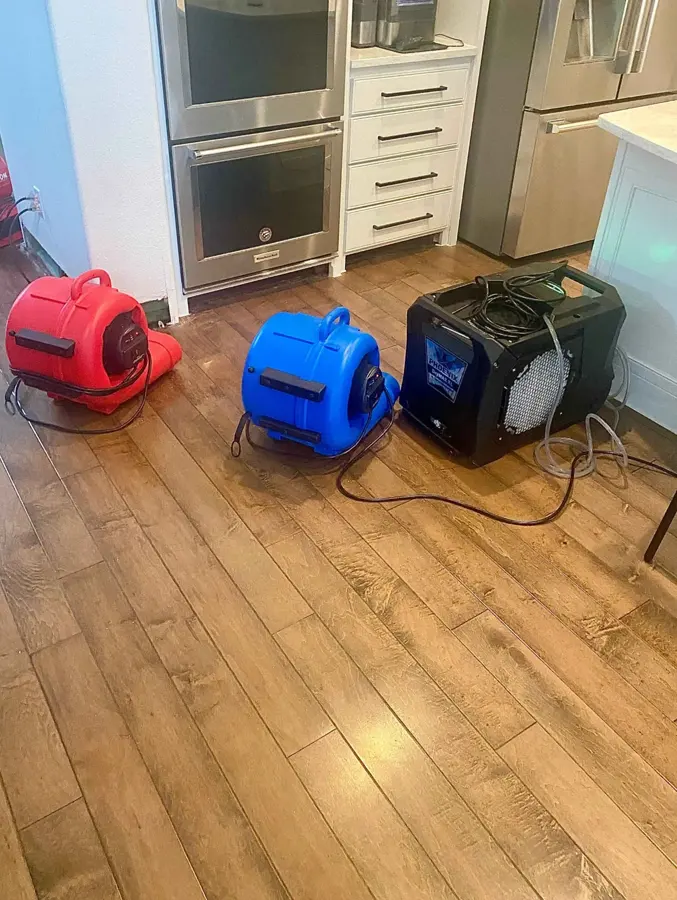
First steps for structural drying and dehumidification in Great Neck
- Keep doors closed
Leave drying rooms closed so the dehumidifiers work on a sealed volume.
- Leave machines alone
Do not move or switch off the equipment, because the placement is planned.
- Expect noise and warmth
Dehumidifiers warm the room and run continuously, which is normal.
- Report changes
Tell the technician about odors or new stains between visits.
Drying is measurement, not guesswork. Air movers push dry air across wet surfaces, dehumidifiers pull the moisture out of the room, and a meter at the studs and subfloor tells the technician whether the structure is really dry, after water extraction has cleared the standing water.
The standard behind every structural drying and dehumidification job in Great Neck
Rapid local response
The response team runs 24/7 dispatch for Fresh Meadows, the rest of eastern Queens and the nearby Nassau villages, with pumps, air movers and meters on the truck.
IICRC S500 drying standard
IICRC S500 is the industry drying standard. The drying team maps moisture first and pulls equipment only when the readings say dry.
Claim-ready documentation
Most crews log daily moisture readings and take timestamped photos before any demolition, which is what an adjuster reads.
Queens water know-how
Basement backups in cloudbursts, frozen pipes in January, steam radiators and old galvanized supply pipe set the work here.
What does structural drying and dehumidification cost in Great Neck, NY?
Structural drying in Great Neck usually runs from $1,000 to $10,000 or more, depending on the size of the wet area, the materials and the class of drying required.
- A few days of drying
- Air movers, one LGR
- Logged daily
- Several dehumidifiers
- Wall cavity drying
- Logged daily
- Desiccant dehumidifiers
- Floor drying mats
- Extended drying
Ranges are typical, not a quote: the water category, the wet square footage, the material class and how fast drying started move the number most. Run the water damage cost calculator for a closer planning range.
How structural drying and dehumidification is handled in Great Neck
- 1
Set the drying goal
The technician records the dry reference readings and the starting numbers.
- 2
Place the equipment
Air movers and dehumidifiers are sized and placed for the wet volume.
- 3
Check daily
Readings are taken at the same points, and the equipment is adjusted.
- 4
Remove and record
Equipment comes out when goals are reached, and the final logs are saved.
Different buildings dry differently
Many village houses and most of its apartment houses were built between 1922 and 1960, and their floors, walls and framing hold moisture in different ways. Shared walls and floors also let moisture travel between units, so the drying plan covers every connected space.
- Dehumidifiers are sized to the volume of the wet space.
- Air movers are placed so air crosses every wet wall and floor.
- Wall cavities are opened or injected when moisture hides behind finishes.
Classes of drying
Light jobs with low-porosity materials dry quickly, while thick hardwood, concrete and layered floors need desiccant dehumidifiers and floor drying mats. The class sets how long the equipment stays, and large losses such as a basement flood usually fall in the heavier classes.
Proof that it is dry
Readings are logged every day at the same points, so the trend is visible. Equipment is removed only when every material reaches the target set at the start, and the final numbers go into the claim file.
Structural drying and dehumidification coverage across Great Neck and nearby communities
24/7 dispatch for structural drying and dehumidification in Great Neck, NY, with the map pinned to the neighborhood.
Structural drying runs through houses and apartment buildings across the village, from the Old Village on Middle Neck Road to Strathmore and Weybridge, including shared walls and floors between units.
The same service nearby: structural drying and dehumidification in Fresh Meadows, Great Neck Plaza, North Hills.
Related water damage services in Great Neck
Structural Drying and Dehumidification questions in Great Neck, NY
Why does drying take several days?
Moisture sits deep in framing and subfloors, and it leaves slowly. Daily readings show when each material is done.
Why do the machines run all day?
Dehumidifiers must pull moisture out continuously. Stopping early leaves moisture in the structure.
Can drying prevent mold?
Drying within 24 to 48 hours greatly lowers the chance, which is why equipment starts on the first visit.
What is an LGR dehumidifier?
A low grain refrigerant unit pulls moisture from the air more efficiently than a standard dehumidifier, which suits wet structures.
Who decides when drying is finished?
The readings do. Each material has a target, and equipment is removed only when every target is met.
Do shared walls change the plan?
Yes. Moisture can move between units, so adjacent walls and floors are checked and documented separately.
Wet framing in Great Neck needs proper drying
Describe the rooms and materials, and a technician schedules the walkthrough so equipment is sized to the wet volume.