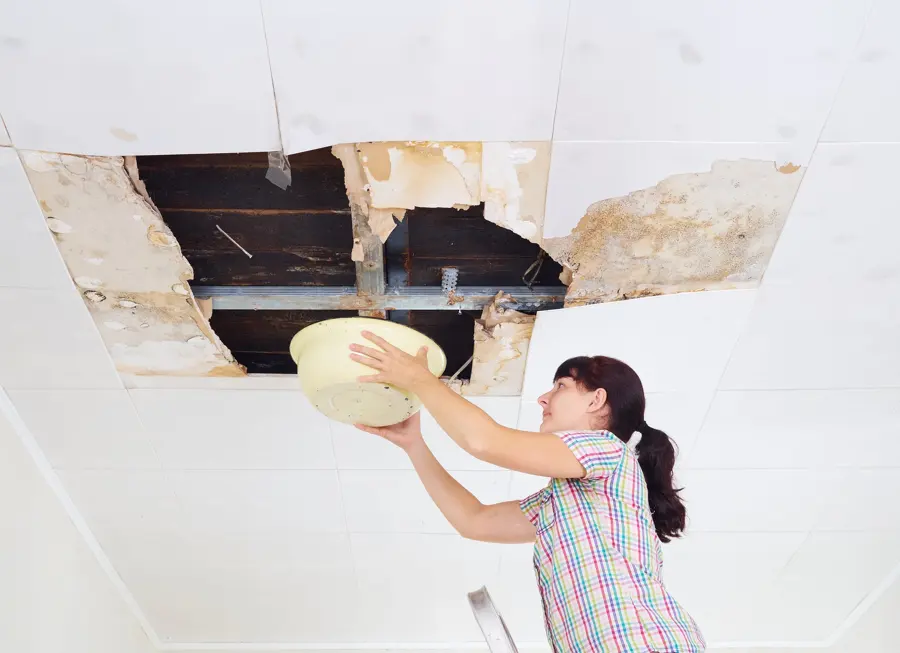
North Hills is a village of residential subdivisions, condominiums, townhouses, apartments and single family homes. In the shared buildings, a leak in one unit can arrive as a stain in another. This post explains how a ceiling leak from the unit above is handled, from the first photograph to drying.
Key takeaways
- The village describes a mix of subdivisions, condominiums, townhouses, apartments and single family homes.
- Communities such as The Gates at North Hills and High Point have units that share floors and ceilings.
- Photograph the stain and tell the board or management before anything is patched.
- The Building Department requires permits for plumbing work, and a contractor who says a required permit is not needed is a warning sign.
- Drying covers the whole ceiling cavity and the nearby walls, not only the visible stain.
Shared floors, shared problems
The village describes itself as a mix of residential subdivisions of privately owned homes and condominiums, in townhouses, apartments and single family homes. The 2020 census counted 2,500 housing units in the village.
In communities such as The Gates at North Hills and High Point, units share floors, ceilings and walls. A failed fitting in an upstairs bathroom or kitchen can reach the ceiling of the unit below.
Safety and photographs
A stained or sagging ceiling can hold water that will fall without warning. Treat the room as a safety problem before it is a cleaning problem.
Making the room safe
Switch off the lights and outlets near the stain from a dry spot. Move furniture away and put a bucket under any steady drip.
- Do not touch a wet light fixture or switch.
- Keep children and pets out of the room until the ceiling is checked.
- Move electronics, papers and artwork out of the wet area.
What to photograph
Take photographs of the stain, any bulge or crack, water on the floor and damaged belongings. Add the date and a short note of what happened.
These records help the board, the managing agent and the insurer understand the loss.
Who to tell
In a condominium or townhouse community, the board or managing agent usually needs to know first. They may control the water shutoff for the building, and they can reach the neighbor above.
Many communities have their own rules about who handles a shared leak. Ask for those rules in writing.
- Report the leak to the board or managing agent and keep a copy.
- Ask that the water to the unit above be shut off while the source is found.
- Ask who is responsible for the ceiling and who is responsible for belongings.
How drying works in a shared building
A crew uses a moisture meter and a thermal camera to trace the water beyond the visible stain. The ceiling cavity, insulation and nearby walls can all be wet.
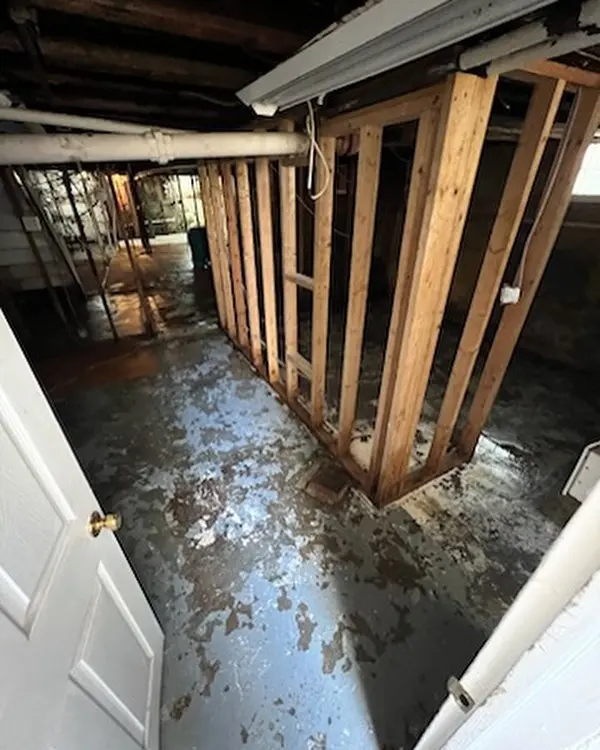
Structural drying follows. Air movers and dehumidifiers run until readings return to normal, and wet insulation or soaked drywall is removed.
- Small sections of ceiling may be opened to dry the cavity.
- Neighboring walls and floors are checked, not just the stained ceiling.
- Readings are repeated before any repair starts.
Permits and contractors
The North Hills Building Department requires permits for structural, electrical, plumbing and mechanical work, and applications go through the village's online building portal. The property owner is responsible for making sure permits are obtained.
The department warns that a contractor who says a required permit is not necessary is a warning sign. That matters when a leak ends with plumbing repairs in the unit above.
Next steps for a condo or townhouse owner
Once the board and the insurer know, a restoration crew can start drying. The same crew can document each affected unit so claims stay separate.
The North Hills hub lists every water service for the village, and the ceiling leak page for Fresh Meadows shows how the same work is done in a nearby Queens neighborhood.
Communities with their own character
The village names several communities. The Gates at North Hills was the first condominium development built during the rapid growth of the 1970s, 1980s and 1990s, and The Links at North Hills sits on the site of the former Links Golf Course.
Gracewood at North Hills uses the Gracefield mansion as its clubhouse, and the High Point condominiums sit east of Searingtown Road on former estate land next to Christopher Morley Park.
Each community may have its own rules for leaks, so owners should read their own documents. Nothing here assumes how any single building is built.
Living in a unit during drying
Drying is noisy and visible. Air movers and dehumidifiers fill the room, and a few ceiling sections may be open for several days.
Telling neighbors what is happening, and when equipment will be running, keeps the building calm.
- Keep the equipment plugged in and untouched.
- Tell the crew about any room that must stay usable.
- Report any new stain, drip or smell right away.
- Ask the crew for readings so progress is clear.
Questions to ask the board or managing agent
A short list of questions gets answers faster and avoids confusion. Ask them in writing so there is a record.
The answers also tell the restoration crew who controls the shutoff, who pays for the first steps and who must approve work in common areas.
- Who controls the water shutoff for the building or the unit above?
- Who is responsible for the ceiling, the walls and the flooring?
- Does the building have a preferred process for reporting a leak?
- What does the building's insurance cover, and what falls to the owner?
- Who approves access to the unit above so the source can be fixed?
When a leak comes from the roof or the heating system
Not every ceiling leak comes from plumbing. Large roofs and shared heating systems can also send water into a unit, and the response is different.
A stain that grows during rain points toward the roof, while a stain near a pipe or radiator suggests heating. A crew can help sort this out with moisture readings, and the board or managing agent can arrange the right repair.
Why records matter in a shared building
A leak that crosses units can lead to questions about who caused it and who pays. Dated photographs, a log of calls and receipts answer most of those questions.
Each owner should keep their own file, even when the board arranges the repair. The same applies to renters, who should also keep the lease handy.
Questions
What does the village say about its housing?
North Hills describes a mix of residential subdivisions of privately owned homes and condominiums, in townhouses, apartments and single family homes.
Who should be told first about a leak from a neighbor?
The board or managing agent. They often control the shutoff for the building and can reach the unit above.
Do plumbing repairs need a permit in North Hills?
The Building Department requires permits for plumbing work, and applications go through the village's online building portal.
Why is a contractor who skips permits a problem?
The Building Department calls it a warning sign, and an open permit can also affect selling a home until a Certificate of Completion or Certificate of Occupancy is issued.
Is the ceiling always replaced after a leak?
No. Moisture readings decide. Wet insulation and sagging drywall are removed, and small stains can sometimes be dried in place.