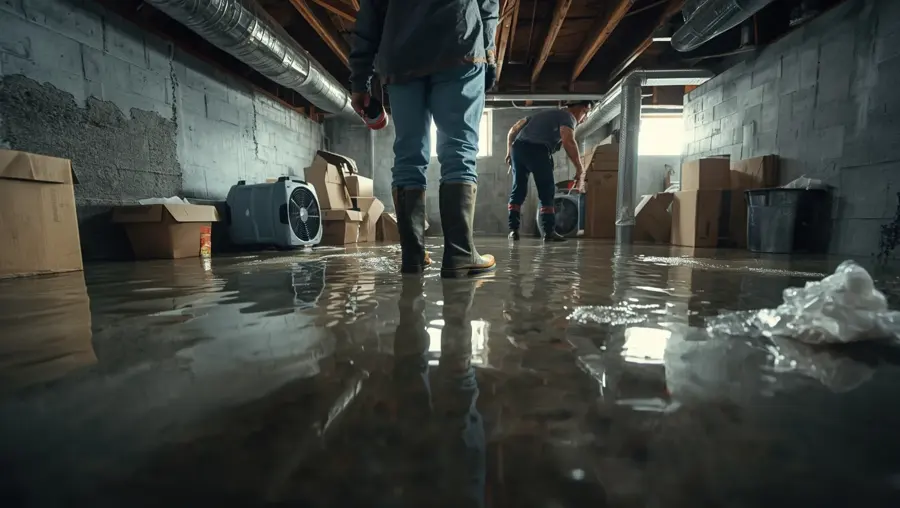
Storm water can collect in a New Hyde Park house far faster than most owners expect. Storm and flash flood cleanup works best when the first decisions are made early, before the water spreads into walls and floors. This post covers what to do in that early window and what the crew handles once it arrives.
Key takeaways
- Flash flooding in the New Hyde Park area has been real: on August 12, 2020 residents reported major flooding and water rescues from cars.
- Turn off power to a flooded level only from a dry spot, and never enter water near outlets.
- Photograph the water level and damaged belongings before moving anything.
- Extraction removes standing water first, which limits what soaks into drywall and flooring.
- Most village homes are owner-occupied single family houses, so the owner usually directs the cleanup.
What August 12, 2020 showed
On August 12, 2020 a flash flood warning covered parts of northwestern Nassau County, and a flood advisory covered central Nassau areas including New Hyde Park. Residents reported major flooding near Hillside Avenue and Lakeville Road.
The Lakeville Estates Civic Association shared a photo of a water rescue and said Hillside Avenue was closed between Lakeville Road and New Hyde Park Road, with people rescued from cars.
Those roads are named as places where flooding was reported, not as locations inside the village limits. The lesson holds for any New Hyde Park owner: storm water gathers fast, and a warning may leave little time to prepare.
The first decisions in a flash flood
Safety comes before saving belongings. Moving water, electricity and contaminated runoff are all hazards, and none of them is visible at a glance.
Power and gas
If the panel is in a dry location, switch off the breakers for the wet level. If the panel, a furnace or a water heater is already in the water, stay out and call the utility or an electrician.
- Never stand in water while touching a switch, cord or appliance.
- Leave the space if there is a smell of gas.
- Do not drive or walk through moving water outside to reach the house.
Document before cleaning
Take wide and close photographs of the water level, the floor, the walls and the belongings at risk. A written list of what was in the space helps later when an insurance claim is filed.
How storm water differs from a pipe leak
Water from a supply pipe is usually clean when it starts. Storm water has crossed streets, yards and drains, so it can carry dirt, oil and bacteria into the building.
That is why a flooded basement after a storm is handled with more care than a washing machine overflow. Porous materials that sat in storm water, such as carpet pad and low drywall, are often removed rather than dried in place.
- Muddy or gray water points to runoff from outside.
- Water that rose through a floor drain may involve the sewer and should be treated as sewage.
- Clean-looking water that has sat for a while still collects contamination from the floor.
Why extraction starts the job
Water extraction is the first step because standing water keeps soaking into drywall, framing and flooring the longer it stays. After a flash flood like the August 12, 2020 event near Hillside Avenue and Lakeville Road, removing the water quickly with pumps and extractors limits the damage that follows.
Once the water is out, the crew moves to what has to be removed, and then to drying the structure.
- Pumps or a truck-mounted unit empty deep water.
- Portable extractors pull water from carpet and low spots.
- Wet carpet pad, low drywall and soaked insulation are cut out as the crew finds them.
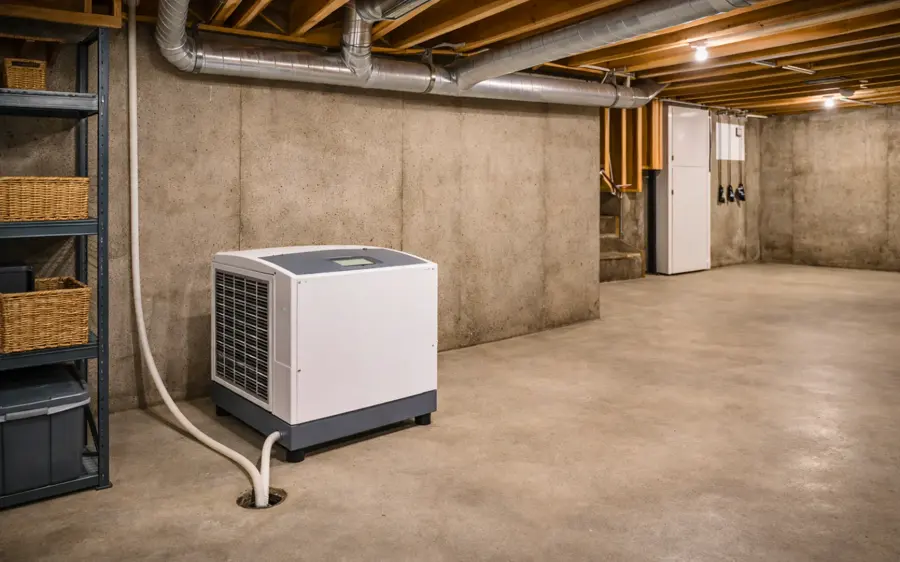
Drying a flooded basement
A basement flood cleanup does not end when the floor looks dry. Air movers and dehumidifiers run while a moisture meter tracks the water still held in walls and framing.
The crew repeats readings until the materials reach a normal range. Rushing this step is how hidden moisture ends up behind a repaired wall.
Drainage, the village and the water supply
The village Department of Public Works runs a Village Stormwater Management Program, and a 2026 draft annual report was posted for the public to read. That program is about public drainage, not the inside of a private home.
Water arrives through the Water Authority of Western Nassau County, and sanitary waste goes into sewers maintained by Nassau County. When a basement floods, none of those agencies cleans the inside of the house, so the owner arranges the work.
Owners, repairs and next steps
About 86.9 percent of housing units in the village are owner-occupied, according to a Census estimate for 2020 to 2024. That means the person who finds the water is usually the person who decides on the cleanup.
A short call to the restoration team starts the plan, and the New Hyde Park hub lists every water service available for the village.
- Photograph first, then call.
- Tell the crew what is in the water and how deep it is.
- Keep a record of every message with the insurer.
After the water goes down, what to check
When the water drops, the house is not out of danger. Wet drywall, insulation and flooring keep working on the building long after the surface looks clear.
Check lower walls, the base of cabinets and any closet or utility room that shares the wet space. A crew can confirm what is wet with a moisture meter and a thermal camera.
Contaminated storm water raises the stakes. Porous items that soaked in it, such as carpet pad, stuffed furniture and low insulation, are usually removed instead of dried, while concrete and tile are cleaned and disinfected.
- Look behind stored boxes and furniture pushed against walls.
- Press the base of drywall for softness or swelling.
- Note any musty smell, which points to hidden moisture.
- Check the furnace, the water heater and the electrical panel for water marks before turning anything on.
Preparing before the next warning
A flash flood warning, like the one on August 12, 2020, is the moment to lift valuables off the floor and learn where the panel and the main shutoff are. A few small habits make a large difference when water arrives fast.
Keep a flashlight and a charged phone on the main level, and keep photographs of the basement in its normal state. Those pictures make it much easier to show what changed.
- Raise boxes and electronics onto shelves.
- Know where the main water valve and the panel are.
- Move vehicles out of low spots before water rises.
- Keep drain covers and gutters clear of leaves and debris.
Questions
Did flash flooding really affect New Hyde Park?
On August 12, 2020 a flood advisory covered New Hyde Park, and residents reported major flooding near Hillside Avenue and Lakeville Road. Water rescues from cars were also reported.
Is storm water in a basement considered dirty?
Yes. Storm water crosses streets and drains before it gets inside, so it can carry dirt and bacteria. Porous materials that sat in it are often removed.
Should a basement be pumped out right away?
Standing water should come out early to limit soaking into walls and floors, but only after the power is made safe. Deep water calls for proper pumps and protective gear.
Who maintains the sewers in the village?
Sanitary waste is collected by sewers maintained by Nassau County, while the Water Authority of Western Nassau County supplies the water. Neither cleans the inside of a private home.
How is a flash flood different from a slow leak?
A flash flood brings a large volume of outside water in at once, with dirt and possible contamination. A slow leak usually starts with clean water and a smaller wet area.