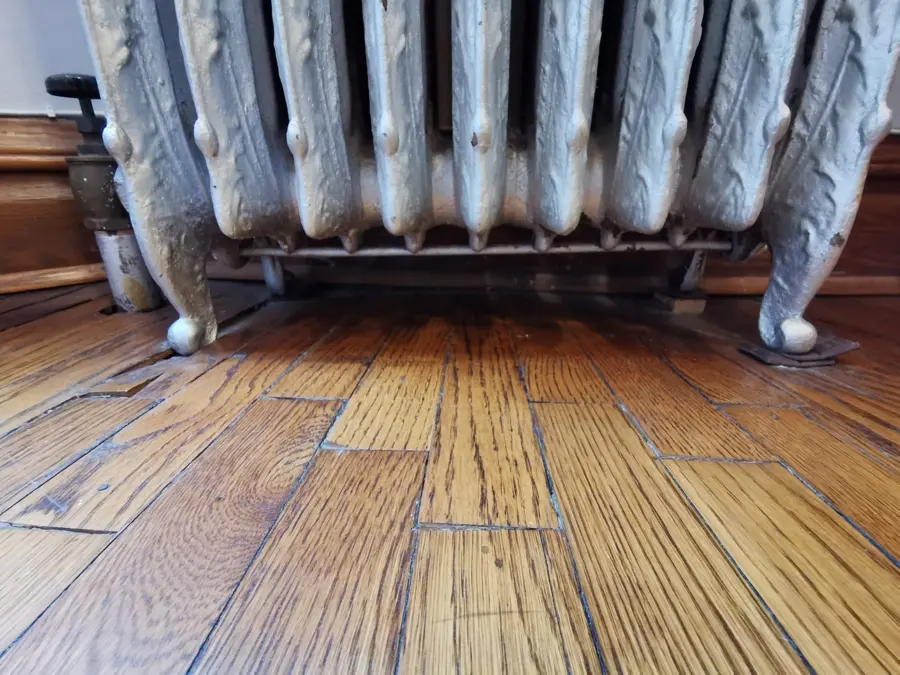
Fresh Meadows has late 1940s garden apartments and row houses, postwar co-ops and brick homes, and many of them still heat with steam or hot-water radiators and aging boilers. When one of those systems leaks, the water is often hot and it travels. This post covers the first steps for a radiator or boiler leak and how the wet building is dried.
Key takeaways
- Hot water and steam can burn, so keep away from a leaking radiator, valve or boiler until it cools or is shut off.
- Turn off the boiler or heating system and the water feed to it, if that can be done safely.
- Water from a heating system travels into plaster, oak floors and the ceiling of the unit below.
- Tell the super or management right away in a shared building.
- Drying covers walls, floors and ceilings, with readings taken until the materials are dry.
Heating systems in Fresh Meadows buildings
The planned garden apartments and row houses in Fresh Meadows date to the late 1940s and sit on the old Fresh Meadow Country Club land. Postwar co-ops and apartment complexes in Pomonok and Electchester add to the mix.
Many of these buildings rely on steam and hot-water radiators and boilers that have been running for decades. Basement water heaters sit in the same utility spaces.
Steam, hot water and the risks of each
A radiator problem begins with a valve, a joint or a crack in the cast iron. A boiler problem usually starts in the boiler room and spreads outward.
Both can release water that is hotter than a faucet, which makes caution the first rule.
A leaking radiator or valve
Water spitting from a steam valve or dripping from a radiator joint should not be touched until it cools. A towel and a pan can catch a slow drip while the system is shut down.
- Do not open a hot valve or cap.
- Move rugs, books and furniture away from the leak.
- Tell the super if the system is shared.
A leaking boiler
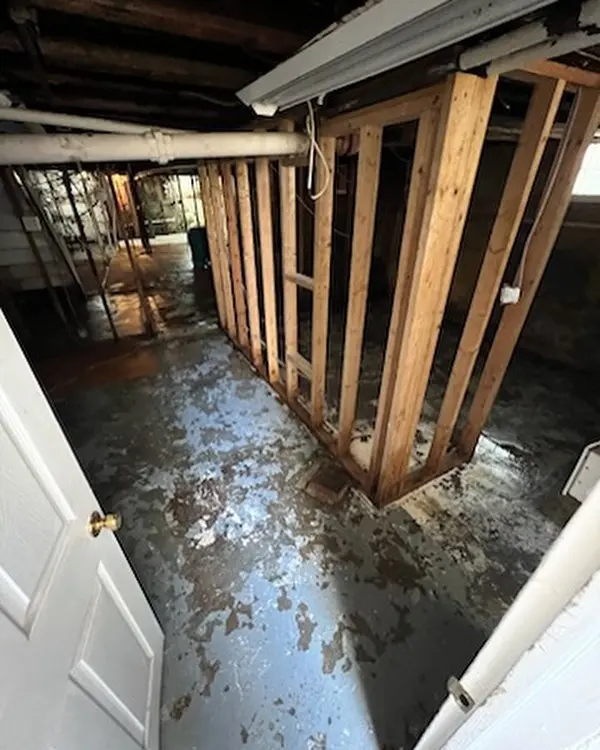
A boiler that leaks onto the floor of a basement or utility room can put water around electrical controls and gas equipment. Stay out of the room if water reaches outlets or the burner.
- Turn off the boiler at its switch only if the floor is dry.
- Leave the space if there is a smell of gas.
- Call the building's heating contractor as well as the restoration team.
Where the water goes
Heating water follows the same path as any other leak: down the wall, under the floor covering and through the ceiling of the unit below. In older buildings, plaster and solid wood floors soak it up and hold it.
The damage may look small at the surface and still be widespread behind it. A radiator and boiler leak is dried by finding that hidden water.
- Plaster walls swell, stain and crack as they absorb water.
- Oak floors cup or lift when moisture gets underneath.
- Ceilings below may bulge or drip.
Extraction and drying steps
Standing water comes out first with water extraction, using pumps or portable extractors. Floor drying mats can pull moisture up through wood and subfloors.
Structural drying follows. Air movers and dehumidifiers run while a moisture meter tracks plaster, framing and flooring until the readings are normal.
- Hardwood floors are checked for moisture before any sanding or refinishing.
- Wet insulation or soaked drywall is removed.
- Rooms below the leak are checked and dried as well.
Shared buildings, supers and neighbors
In a co-op or apartment complex, the boiler and risers often belong to the building, not to one resident. Tell the super, the board or the managing agent as soon as the leak is found.
If water reached a ceiling below, a ceiling leak in that unit becomes part of the same loss. Photographs from both units keep the records clear.
Winter cold and old boilers
January and February cold snaps put heavy demand on heating systems in Fresh Meadows, and aging boilers and valves are more likely to fail under that load. Watching for small drips in the fall is cheaper than finding a flooded boiler room in the middle of winter.
- Check radiator valves and joints for staining or drips.
- Look at the floor around the boiler for rust or standing water.
- Report small leaks to the super before the cold arrives.
Warning signs before a radiator or boiler fails
Heating systems usually give hints before they leak badly. Noticing them early, especially before the cold arrives, can prevent a flood.
Residents who see these signs should tell the super or the managing agent right away, and should not try to tighten hot fittings themselves.
- Rust stains or crusty deposits at valves and joints.
- A radiator that bangs or hammers when the heat comes on.
- Water pooling below a valve after the boiler has run.
- A boiler that needs water added again and again.
- Damp plaster or peeling paint near a radiator.
Rusty water and what it leaves behind
Water from a heating system can be rusty or discolored, and it stains what it touches. On plaster and oak, that means cleaning as well as drying.
A crew checks the stained areas and decides what can be cleaned and what has to be replaced. Moisture readings still decide when the drying is finished.
What residents can do while waiting
A few simple steps limit the spread while the system is shut down and the crew is on the way. None of them requires touching hot parts.
Cooling takes time, so patience helps. A leaking boiler or radiator that is turned off is far safer to work around than one still running.
- Place towels and a shallow pan to catch drips from a cool valve.
- Move furniture, rugs and boxes away from the wet area.
- Take photographs of the leak and the wet surfaces.
- Tell neighbors below that water may be coming through the ceiling.
- Keep children and pets away from the area.
Heat during the repair
Residents often lose heat while a radiator or boiler is repaired, which makes timing in cold weather important. Ask the super about temporary heat and about when the system will be back.
The drying equipment adds warmth to the rooms it serves, but it does not replace a working heating system.
Questions
Is water from a radiator dangerous?
It can be. Steam and hot water can burn, so avoid touching a leaking valve, joint or boiler until the system is off and cool.
Who handles a boiler leak in a co-op?
The building usually owns the boiler, so the super, board or managing agent should be told. A restoration crew handles the water damage inside units and common areas.
Can oak floors be saved after a radiator leak?
Often yes, if the moisture is found early. Floor drying mats and dehumidifiers pull water out, and readings show whether the wood has returned to normal.
Does the leak affect the apartment below?
It can. Water moves down walls and through floors, so the ceiling of the unit below should be checked and dried.
What should be photographed?
The leaking part, the wet floor and walls, the boiler room and any damaged belongings. Add the date and a short note.