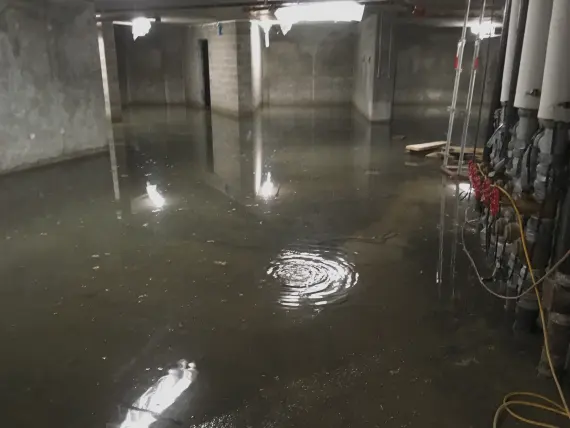
Fresh Meadows is a neighborhood of Queens where nearly every building has a basement or cellar, so a summer cloudburst turns into a basement problem quickly. Basement flood cleanup begins with a few careful decisions made before anyone touches a wet floor. This post walks through those decisions in order, from the electrical panel to the drying equipment.
Key takeaways
- Stay out of standing water until the power to that level is off or confirmed safe.
- Water that rises through a floor drain should be treated as sewage, not rainwater.
- Photograph the water level, the stored belongings and every wet wall before anything is moved.
- Extraction comes first, then removal of soaked carpet and pad, then drying with dehumidifiers.
- Garden apartments and co-ops often share a cellar, so building management should hear about the water right away.
Why a cloudburst reaches Fresh Meadows basements
Humid summers in Fresh Meadows bring cloudbursts, and the neighborhood drains into the combined city sewer. That one system carries storm runoff and household waste together, so a heavy burst of rain can fill it faster than it can empty.
When the sewer is full, water looks for the lowest point in a building. Floor drains here are tied to the city sewer, so a full sewer can push water up through them even when the yard looks fine.
The remnants of Hurricane Ida on September 1, 2021 flooded basements across Queens, and many owners in Utopia and Hillcrest remember it well. The housing is much the same today: brick one and two family homes from the 1930s to the 1950s, plus postwar apartment complexes with cellars below.
Before touching anything
Water and electricity do not mix, and a flooded basement can hide live outlets, a submerged panel or an energized appliance. The first job is to make the space safe, not to start bailing.
Power, gas and the boiler room
If the electrical panel sits in a dry spot, turn off the breakers for the flooded level. If the panel or the boiler stands in the water, stay upstairs and let an electrician or the utility make it safe.
- Do not wade into water that touches outlets, appliances or the panel.
- Leave the space if there is a smell of gas near the water heater or boiler.
- Keep children and pets out of the flooded level until the work is done.
Photographs and a quick inventory
Before anything is moved, photograph the water level on the walls, the stored items and each affected room. These pictures support an insurance claim and help the crew plan the job.
Write a short list of what was on the floor, such as boxes, a washer or a furnace, so nothing is forgotten once the cleanup starts.
Is it rain, seepage or sewage?
Basement water is not all the same, and the type changes the cleanup. Rain that seeps through a wall is handled differently from water that comes up a floor drain.
Water from the sewer is Category 3, which means it can carry bacteria and calls for protective gear and containment. Sewage backup cleanup removes porous materials that touched it instead of trying to save them.
- Clear water from a cracked wall or window well starts out cleaner but gets worse the longer it sits.
- Gray or dark water with an odor, or water that rose through a floor drain, is treated as sewage.
- Mud on the floor points to storm water that came from outside the building.
What extraction removes first
Crews begin with water extraction because standing water keeps soaking into everything it touches. Truck-mounted units or pumps empty the space, and portable extractors then work on carpet and low spots.
Storm and flash flood cleanup goes a step further and sorts what can be dried from what has to leave the building.
- Carpet and pad from a finished basement.
- The lower part of drywall that wicked water upward.
- Cardboard boxes, particleboard furniture and stored paper.
- Insulation that sits against wet walls.
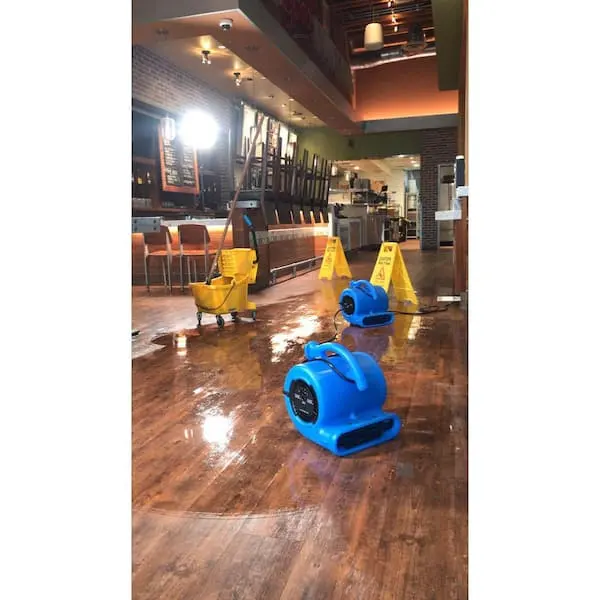
Drying after the water is out
Once the standing water is gone, the structure still holds moisture. Air movers push dry air across surfaces, and dehumidifiers pull moisture out of the air so it does not settle somewhere else.
A moisture meter and a thermal camera show where water remains inside walls and under floors. The readings are repeated until the materials are dry, and older plaster walls and wood floors get the closest watching.
Garden apartments, co-ops and shared cellars
Many Fresh Meadows residents live in garden apartments, row houses and postwar complexes in Pomonok and Electchester. In those buildings a cellar, laundry room or boiler room may be shared.
A flooded shared cellar belongs to more than one household, so the super or management company should be told right away. Photographs of personal storage help separate one resident's losses from the building's.
- Tell management or the board before hiring a crew for a shared space.
- Keep a copy of every message about the water.
- Ask which areas the building will handle and which belong to the resident.
Mistakes that make a flooded basement worse
The urge to act quickly can backfire. A few common moves add cost or risk, and each one is easy to avoid.
Running a household vacuum on standing water is dangerous, and so is carrying wet boxes through a dark stairwell. Leaving wet carpet in place because it still looks fine is a quieter mistake that leads to a bigger repair later.
- Using a regular vacuum or a space heater near standing water.
- Pumping the basement empty all at once while the ground outside is still soaked, which can push water back in.
- Keeping soaked carpet and pad because they seem salvageable.
- Throwing away damaged items before they are photographed.
- Waiting for the floor to dry on its own.
A realistic first day
The first day tends to follow a pattern. The power is made safe, the photographs are taken and a crew sets up extraction.
Once the water is out, the crew sorts materials into those that can be dried and those that must leave. Anything that sat in sewage water is bagged and removed, and then the air movers and dehumidifiers go in.
By evening the space looks very different, with bare floors, open wall bases and loud equipment. That can be unsettling, but it is how a wet basement gets dry instead of merely damp.
- Morning: power made safe, photographs taken, a call to the restoration team.
- Midday: extraction, then removal of soaked carpet, pad and cardboard.
- Evening: drying equipment running and the first moisture readings recorded.
Questions
Is basement water after heavy rain always sewage?
No. Seepage through a wall or a window well can be plain rainwater. Water that comes up through a floor drain in a building tied to the city sewer should be treated as sewage until a restoration crew confirms otherwise.
Can a homeowner pump out the basement alone?
A small amount can be removed with a wet vacuum once the power is off. Deep water, sewage or water that keeps rising is a job for crews with proper pumps and protective gear.
What should be photographed after a basement flood?
The water level on the walls, the stored belongings, the floor drain, the furnace or boiler area and any damage to the ceiling below. Wide shots and close shots both help.
Why does drying take so long after the water is gone?
Plaster, wood framing and concrete hold moisture deep inside. Dehumidifiers and air movers run until moisture readings return to normal levels.
Who handles a flooded shared cellar in an apartment building?
It depends on the building. Management or the board often controls the shared space, so ask who handles which areas before any work begins.