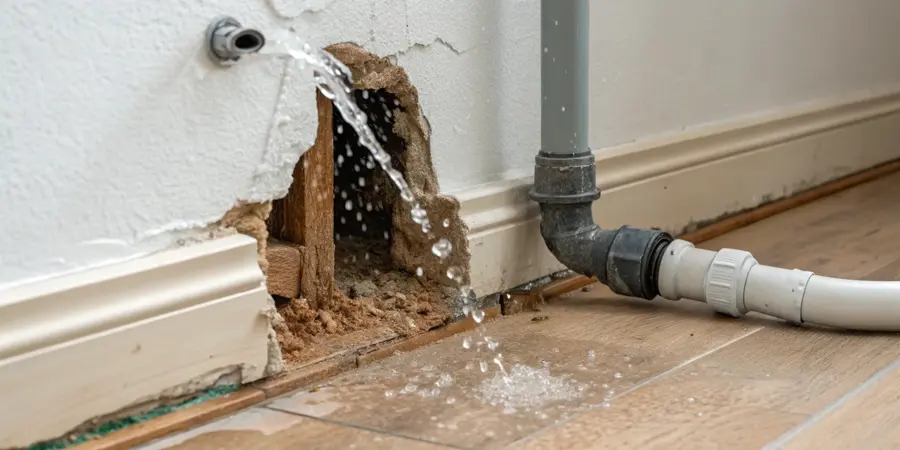
A burst pipe turns a quiet house into a wet one in a very short time, and in older homes the pipe is often hidden inside a wall or ceiling. Floral Park has plenty of older homes, so the first steps matter. This post covers what to do in order and how burst pipe water damage is dried out afterward.
Key takeaways
- The median home in Floral Park was built in 1938, so many pipes behind plaster and tile are decades old.
- Shut off the water at the main valve first, then turn off power to wet rooms from a dry spot.
- Photograph the damage before moving belongings.
- Extraction removes standing water, and drying handles the water held in framing and subfloors.
- The village Building Department posts a plumbing permit application for the repair that follows.
Why older Floral Park homes see burst pipes
Floral Park had a median home build year of 1938, and the housing is mostly detached Tudors, Colonials and Capes on tree-lined blocks. Many of those houses have been renovated, but not every pipe behind every wall has been replaced.
The village has 5,647 occupied homes, and about 85.5 percent are owner-occupied. A burst pipe in one of those houses is usually the owner's problem to solve.
The first steps, in order
Speed matters because a failed pipe keeps delivering water until the supply is shut.
Stop the water
Close the main shutoff valve, usually near the meter or where the supply enters the house. Then open a low faucet to drain what is left in the pipes.
- Know where the main valve is before an emergency.
- If the valve will not turn, call a plumber and keep everyone away from the wet area.
- Do not use hot water or a heating system until the pipe is repaired.
Make the rooms safe
Water in a ceiling can sit on top of light fixtures and wiring. If the panel is dry and easy to reach, switch off the breakers for the wet rooms.
- Stay out of rooms where water falls from a ceiling or light fixture.
- Lift small rugs and move furniture to a dry area.
- Do not use a household vacuum on standing water.
Documenting the loss
Take photographs of the damaged pipe if it is visible, the wet walls, the ceiling and the floor. Write down the time the leak was found and the time the water was shut off.
These notes matter for the insurance claim and for the plumber and the crew who follow.
What extraction and drying remove
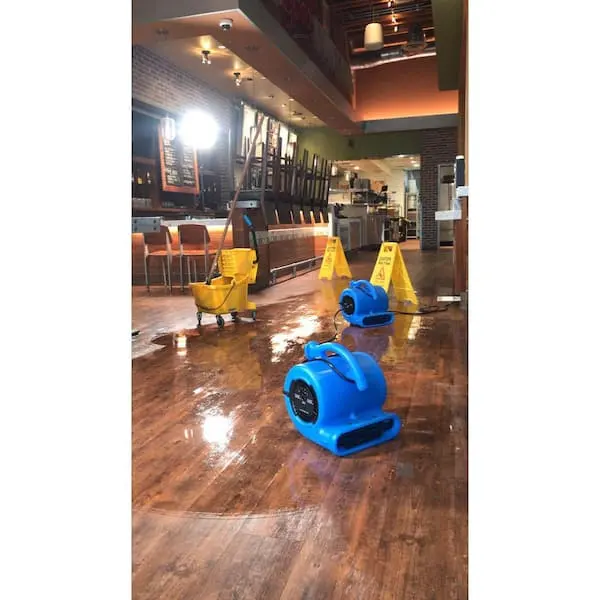
A water extraction crew pulls standing water from floors and carpet with pumps and portable extractors. Taking this water out early stops it from wicking up walls.
Structural drying then deals with the moisture left in framing, plaster, subfloors and the hidden space behind walls. Older houses with thick plaster and solid wood hold water longer, so drying needs patient monitoring.
- Air movers push dry air across wet surfaces.
- Dehumidifiers pull moisture out of the air.
- A moisture meter and a thermal camera show where water remains.
- Wet insulation and soaked drywall are removed when they cannot dry.
Two family homes and apartments
Floral Park has 1,572 housing units in buildings of two or more units. In those buildings a burst pipe can wet a neighbor's ceiling as well as the owner's floor.
Tell the other household right away, and keep each household's photographs separate.
The repair and the permit
The village Building Department issues permits and posts a form for plumbing, gas and oil work, and it says to call before making changes to a property. A pipe repair is a good moment to ask what the village requires.
Cleanup comes first, and the repair follows once the structure is dry. The Floral Park hub lists the water services available in the village.
Where pipes fail in older houses
Age does not mean a pipe will fail, but corrosion, movement and temperature swings wear on joints and fittings. Floral Park has cool, wet winters, and a pipe in an exterior wall or an unheated space faces that cold.
The failure often starts small and grows. A pinhole that weeps for weeks can become a split that floods a room.
- Joints and fittings that have corroded over time.
- Pipes in exterior walls and unheated spaces.
- Supply connections at toilets, sinks and washing machines.
- Old valves that no longer close fully.
The sequence of a burst pipe job
A burst pipe job follows a sequence: stop the water, remove what is standing, open what has to be opened, dry the structure and then rebuild.
Each step depends on the one before. Rebuilding before the walls are dry only hides the problem.
- The plumber stops the leak and repairs or replaces the pipe.
- The crew extracts standing water and checks for hidden wet areas.
- Wet insulation, soaked drywall and damaged flooring are removed.
- Air movers and dehumidifiers dry the framing and subfloor.
- Moisture readings confirm the structure is dry before repairs begin.
What homeowners can do before the crew arrives
Some steps help without adding risk. Lifting furniture legs onto blocks or foil keeps wet floors from staining wood, and moving small items to a dry room prevents more losses.
Opening cabinet doors under a sink or vanity lets air reach wet cabinet backs. Anything heavy or electrical is better left for the crew.
- Roll up small rugs and move them outside the wet area.
- Place foil or plastic under furniture legs.
- Open cabinet doors under affected sinks.
- Keep the thermostat steady and do not run the dishwasher or washer.
- Leave soaked ceilings alone unless they are bulging and unsafe.
Small leaks that were never fixed
Not every burst pipe is a sudden event. A slow drip behind a wall can wet insulation and framing for weeks before a stain appears.
When a stain appears on a ceiling or wall, a crew can trace the moisture back with a thermal camera and open only the section that is wet.
Who does what
The Water Authority of Western Nassau County supplies water to Floral Park. It does not clean or dry the inside of a house, so a burst pipe means a plumber for the repair and a restoration crew for the water.
The homeowner coordinates both. Photographs, receipts and a note of each call keep the claim tidy.
Questions
How old are most homes in Floral Park?
The median year a home was built is 1938. Many houses are older Tudors, Colonials and Capes, though some have updated plumbing.
What is the first thing to do with a burst pipe?
Shut off the water at the main valve, open a low faucet to drain the pipes, and switch off power to wet rooms only if the panel is dry and reachable.
Will the walls need to be opened?
Sometimes. A moisture meter and a thermal camera show whether water is trapped, and wet insulation or soaked drywall is removed. Small leaks can be dried in place.
Does the village require a permit for plumbing repairs?
The village Building Department posts a plumbing permit application and says to call before making changes to a property. Ask the department what the repair needs.
Is a burst pipe covered by insurance?
Policies differ. Photographs, a note of when the water was shut off and a list of damaged belongings help any claim.